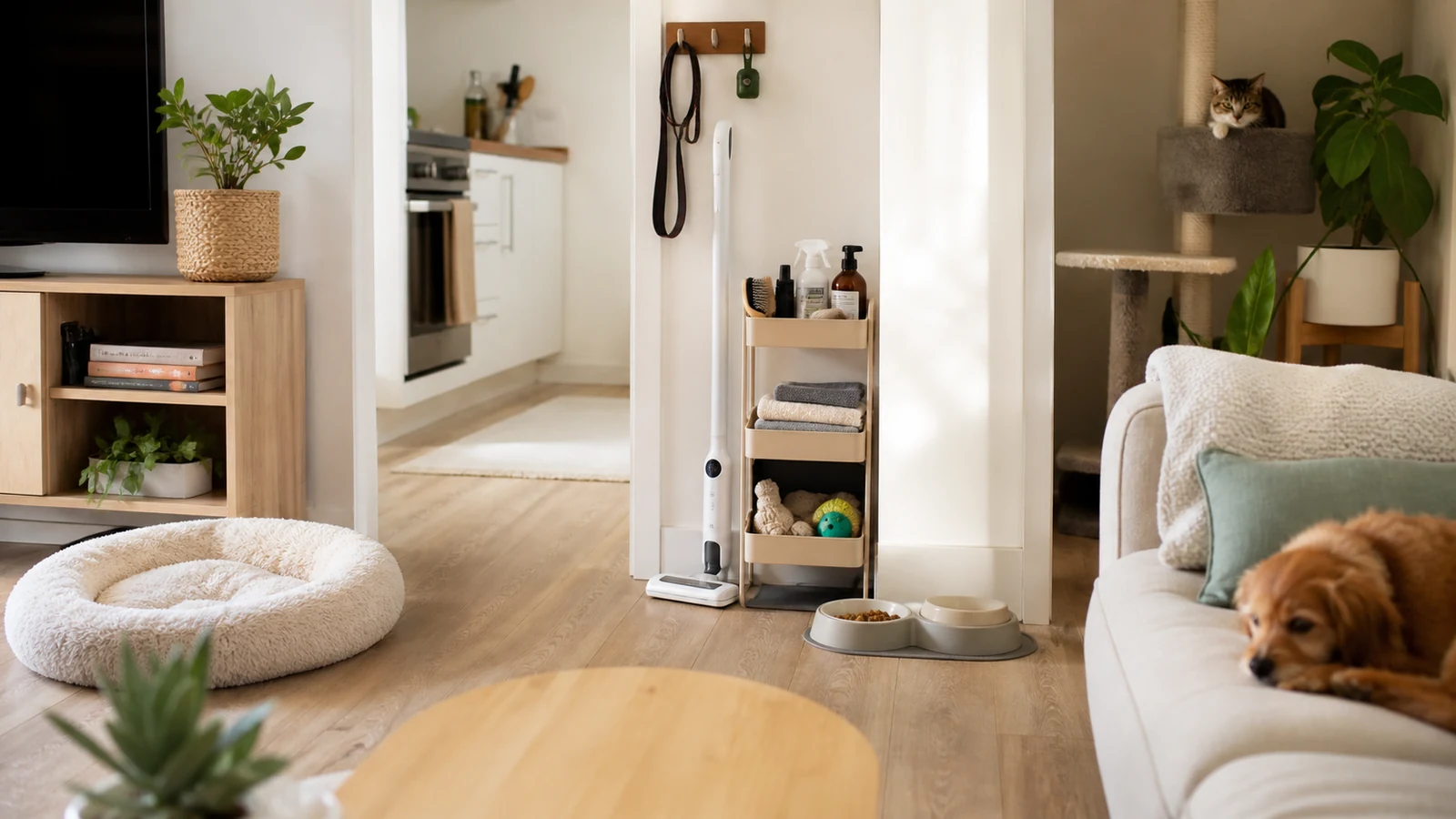
A weekly cleaning schedule for apartments with pets works best when it separates normal buildup from urgent messes. Hair, litter scatter, food residue, bedding odor, muddy paw marks, and small floor messes do not all deserve the same response. Some things need a quick daily reset. Some can wait for a weekly cleaning session. Some should be checked monthly. A few should never wait for “cleaning day” because they are trigger events.
The goal is not to keep a small apartment spotless. That usually creates more stress than cleanliness. The goal is to keep pet mess from spreading from one zone to the next: from the litter area to the hallway, from the sofa to clean laundry, from the pet bed to the bedroom, from a wet entryway towel to a sour smell, or from one missed accident to a deeper carpet problem.
Use this guide as a practical routine hub. It does not replace odor troubleshooting, pet-hair control, accident cleanup, vacuum buying, or laundry technique. It gives you the weekly rhythm that ties those pieces together.
Quick Answer
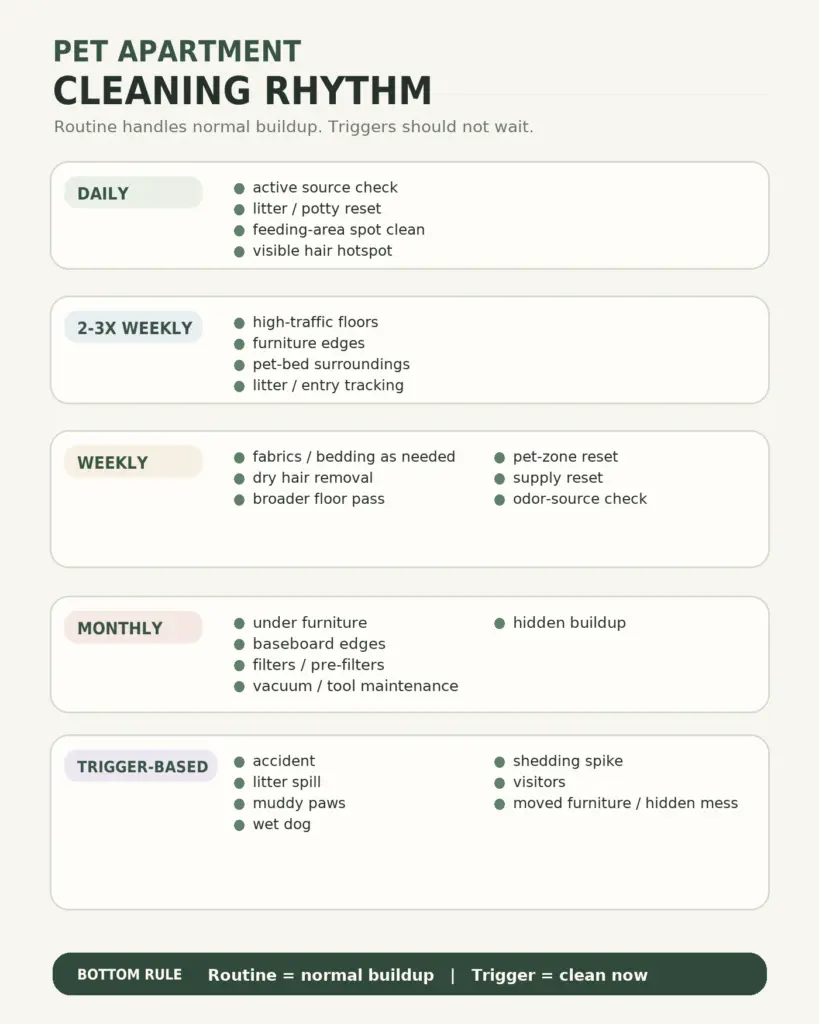
For most small apartments with pets, use this rhythm:
- Daily: remove active sources, scoop or reset waste areas, wipe obvious food or water residue, pick up visible hair hotspots, and check for odor or wet spots.
- 2–3 times weekly: clean high-traffic floors, furniture edges, pet-bed surroundings, entry areas, litter tracking paths, and other zones where hair or debris spreads.
- Weekly: run the main cleaning session in the right order: collect fabrics, clear surfaces, remove dry hair, clean floors, reset pet zones, handle pet bedding, wipe feeding areas, and restock supplies.
- Monthly: check hidden buildup under furniture, behind pet beds, near baseboards, around filters, inside cleaning tools, and near washer/dryer or litter/potty surroundings.
- Trigger-based: clean immediately after urine or feces accidents, litter spills, muddy paws, wet-dog events, shedding spikes, visitors, moved furniture, or any unusual odor source.
The best routine is not “clean everything more.” It is:
Zone → Frequency → Trigger → Tool Category → Stop When Clean Enough
That means each task should have a zone, a normal rhythm, an event that changes the rhythm, a simple tool category, and a stop condition.
Table of Contents
The Apartment Pet-Cleaning Rule: Routine vs Trigger
Most pet-cleaning schedules fail because they treat every mess as equal. That leads to two opposite problems.
One person over-cleans. They vacuum the whole apartment every day, wash pet bedding constantly, wet-clean floors too often, and still feel behind because there is no clear stopping point.
Another person under-cleans. They wait until the apartment smells off, hair is on every fabric surface, litter has traveled into the living room, or the pet bed has become the odor source.
A better system separates routine cleaning from trigger cleaning.
Routine cleaning handles normal buildup. This includes loose hair, ordinary litter tracking, dry floor debris, food crumbs, washable bedding, lint, and pet-zone reset tasks. Routine cleaning can be scheduled.
Trigger cleaning handles a specific event that should not wait. This includes urine, feces, vomit, mud, wet fabric, a litter spill, a sudden odor source, or hidden buildup found when furniture moves. Trigger cleaning interrupts the schedule because waiting can make the problem harder.
The practical question is not “How often should I clean everything?” It is “What kind of mess is this?”
If it is ordinary buildup, place it in the schedule. If it is an active source, clean it now.
Your Weekly Cleaning Schedule at a Glance
| Frequency | Main Zones | Typical Tasks | Trigger to Escalate |
|---|---|---|---|
| Daily | Waste areas, food/water area, visible hair hotspot, entryway | Remove active sources, wipe obvious residue, scoop or reset, pick up visible hair | Strong odor, wet spot, accident, muddy entry |
| 2–3x weekly | Floors, sofa edges, pet bed area, litter tracking path, entry mat | Hair pickup, floor pass, furniture touch-up, mat shakeout | Hair spreading to laundry, guests, shedding spike |
| Weekly | Fabrics, bedding, floors, pet zones, feeding station, supply area | Main cleaning session in the right order | Persistent odor, repeated mess, overloaded fabrics |
| Monthly | Under furniture, baseboards, filters, vacuum parts, hidden corners, storage | Hidden-zone reset and equipment maintenance | Low suction, stale odor, visible buildup, moved furniture |
| Trigger-based | Accident spot, wet fabric, litter spill, muddy path, odor source | Immediate source control, label-based cleanup, drying/recheck | Odor returns, surface damage, repeated accidents |
This table is a starting structure, not a rigid rule. A short-haired cat in a studio, a senior dog in a one-bedroom, and a multi-pet household with shared laundry will not need the same intensity. The schedule should flex with shedding, weather, accidents, illness, visitors, and your actual floor plan.
Daily: The 5–10 Minute Reset
A daily reset is not a full clean. It is a small source-control pass. In many apartments, five to ten minutes is enough as a practical planning range, but the clock is less important than the purpose: catch the mess that spreads fastest.
Start with active sources.
If you have a litter box, scoop or reset it according to your normal routine. If you use an indoor potty area, check whether it is clean, dry, and not creating odor. If food or water has spilled, wipe the obvious residue. If a pet has tracked in mud, do not wait until the floor session later in the week. If a wet towel or damp mat is sitting near the door, hang it or move it so it can dry.
Next, touch the highest-impact hair zone. This may be the sofa cushion where your pet sleeps, the edge of the rug, the hallway corner, the pet bed, the dark clothing chair, or the spot near the litter mat. You are not trying to remove every hair. You are stopping the most visible transfer point from feeding the rest of the apartment.
Then do a quick air-and-odor check. This does not mean spraying fragrance. It means asking: is there an active source? Trash, litter, damp fabric, food residue, a wet dog towel, a pet bed, or a missed accident? If the smell is persistent or you cannot identify the source, use the Tidy Pet Living guide to pet odor in apartments instead of masking it.
What should not be daily for most households? A full deep vacuum of every surface. Washing all pet bedding. Wet-cleaning every floor. Disinfecting every pet item. Treating carpet “just in case.” These may be useful in specific situations, but they should not be the baseline for every apartment every day.
Daily cleaning should make tomorrow easier, not exhaust you tonight.
2–3 Times Per Week: Hair and Pet-Zone Maintenance
The midweek routine is where small apartments often win or lose. Hair and dry debris do not usually become a problem in one hour. They become a problem after several days of transfer.
Use this pass for the zones that feed the mess cycle:
- main walking path
- sofa or chair edge
- pet bed surroundings
- litter tracking path
- entry mat
- rug edge
- bedroom floor near pet resting areas
- hallway corner where hair collects
- feeding mat if crumbs or splashes build up
The point is not to redo the whole apartment. It is to interrupt transfer.
For hair, choose the right tool category for the surface: a vacuum or floor-cleaning tool for floors, a lint or fabric tool for furniture, a washable cloth or mat reset near pet zones, and a quick pickup for corners. Do not turn this section into a vacuum-shopping decision. If the real issue is whole-apartment hair movement, use the guide to pet hair in apartments for the deeper hair-control system.
For litter tracking, focus on the path, not only the box. In a small apartment, litter may move from box to mat, mat to hallway, hallway to bed, and then into laundry. The midweek task may be as simple as shaking or cleaning the mat, picking up scatter near the box, and doing a quick floor pass along the first few steps away from the litter area.
For entry dirt, use weather as the trigger. Dry weeks may need little more than a mat reset. Rain, mud, snow, road salt, or wet paws may turn the entryway into a daily task for a few days.
This 2–3x weekly layer keeps the weekly session from becoming a rescue mission.
Weekly: The Main Cleaning Session
The weekly session is the core of the schedule. It should have an order of operations. Without an order, you end up cleaning the floor, then shaking hair from bedding onto it. Or you wipe surfaces before moving dusty pet supplies. Or you start with wet cleaning before removing dry hair.
Use this sequence:
1. Collect fabrics first.
Gather washable pet throws, bedding covers, blankets, sofa covers, crate mats, towels, and washable entry mats that actually need cleaning. Do not automatically wash every pet textile every week if it is clean, odor-free, and lightly used. Use visible hair, soil, odor, dampness, and care labels as the decision points.
2. Clear the main surfaces.
Pick up toys, bowls that need washing, loose bags, grooming tools, lint tools, and anything blocking the floor path. The goal is not organizing your whole life. It is clearing enough surface and floor area to clean once.
3. Remove dry hair before wet cleaning.
Hair is easier to control when it is dry and loose. Use the appropriate tool category for floors, rugs, upholstery, and corners before mopping or wiping damp surfaces. This prevents hair from clumping into wet streaks.
4. Clean floors from high-use zones outward.
Start where pets travel and rest most: entry path, sofa area, pet bed, litter path, feeding area, and bedroom route if pets sleep near you. Then do the broader floor pass. In a studio, this may be one continuous loop. In a one-bedroom, it may be living room first, then bedroom, then kitchen or bathroom.
5. Reset pet zones.
Clean the feeding area, check the water area, reset the litter or potty surroundings, straighten the pet bed, and remove any stale towels or mats. The CDC guidance on cleaning pet supplies distinguishes cleaning from disinfecting and gives examples for bowls, bedding, toys, and items that contact waste. Use that kind of distinction here: ordinary maintenance usually starts with cleaning, while disinfecting is situation-specific.
6. Handle laundry as a cadence task.
MVP-012 should not become a laundry tutorial. The weekly schedule simply decides what enters the laundry cycle: bedding, throws, washable covers, towels, and mats based on hair, soil, odor, use, and label instructions. For pre-wash removal, washing, drying, and appliance cleanup, use the full pet-hair laundry workflow.
7. Wipe feeding and nearby floor areas.
Food crumbs, water splashes, drool, and damp mats can create odor or sticky residue in small spaces. Clean obvious residue, dry the area, and keep food and cleaning supplies separate.
For the full material-by-material process, see how to clean pet bowls.
8. Restock the small cleaning station.
Replace trash bags, paper towels if used, washable cloths, gloves, waste bags, or any everyday supplies. This is not a shopping list. It is a friction check. If the right item is never where the mess happens, the routine will fail.
9. Inspect odor sources last.
After the dry hair and visible mess are removed, the apartment is easier to read. If odor remains, you are no longer guessing through clutter. Look at pet bedding, waste areas, damp textiles, trash, carpet spots, and hidden corners. If odor keeps returning, move from schedule mode into source troubleshooting.
The weekly session should leave the apartment functionally reset, not perfect. A good stop condition is: visible loose hair is controlled, active odor sources are removed, pet zones are dry and usable, feeding areas are free of obvious residue, floors look and feel acceptable, and supplies are back where they belong.
Monthly: Hidden Buildup and Equipment Maintenance
Monthly cleaning is not about making the apartment showroom-clean. It is about finding what normal routines miss.
Check under furniture, behind pet beds, along baseboards, around litter or potty areas, beside storage bins, under the sofa, behind the bedroom door, and near the laundry basket. Small apartments often hide buildup in edges because furniture is close together and every item has to do more than one job.
This is also the right time to check cleaning tools. A vacuum full of pet hair can lose performance if the dust cup, brushroll, filters, or air path are neglected. Manufacturer guidance from brands such as Shark and BISSELL commonly emphasizes emptying debris, cleaning brushrolls, checking filters, and letting washable filters dry fully before reinstalling. Follow your own model’s manual rather than a generic schedule.
If you use an air purifier, check the pre-filter or outer intake area according to the product instructions. The AHAM air cleaner guidance notes that filters should be changed according to the appliance manual and may need attention more often in areas with higher pollutant levels, such as where pets spend time. Do not replace filters early just because the calendar changed. Use the manual, visible buildup, performance, and indicator lights if your unit has them.
Monthly is also a good time to remove failed tools. If a lint tool, mat, storage bin, or cleaning product is never used, hard to clean, unsafe to store, or always in the wrong place, it is adding friction. A smaller routine that you repeat is better than a crowded cleaning station that makes every task feel bigger.
Trigger-Based Cleaning: Do Not Wait for Sunday
A trigger is a specific event. It changes the schedule.
Urine or Feces Accident
Do not wait for the weekly session. Remove the active source, follow the cleaner label, keep pets away as directed, and avoid mixing products. If the accident is cat urine in carpet, use the guide to cat urine smell in apartment carpet for the cleanup workflow. If you already know an enzyme cleaner is appropriate and need product-selection help, use the research-based guide to best enzyme cleaners for pet urine.
If accidents repeat, routine cleaning is no longer the whole answer. You may need pet health, behavior, litter, potty, surface, or landlord-related next steps depending on the situation.
Litter Spill or Potty Miss
Treat this as source control plus scatter control. Remove waste or wet material first, then clean the surrounding floor or mat. Do not expand it into a full apartment clean unless tracking has already spread. In a small apartment, the path away from the litter or potty area matters as much as the immediate spot.
Muddy Paws / Wet Dog
This is an entryway trigger. Dry or clean the pet as appropriate, handle wet towels, reset the mat, and clean the path before the mess reaches bedding or furniture. A wet towel left in a small apartment can become an odor source even if the floor looks fine.
Shedding Spike
During a shedding spike, tighten the hair routine temporarily. Add extra passes on the highest-hair surfaces, pet bedding, sofa edges, and floor corners. Do not redesign the whole schedule around one seasonal week. Increase the frequency until the spike settles, then return to baseline.
Visitors Coming
This is not the time for a full deep clean. Prioritize guest contact points: entry path, seating surface, visible hair, litter or potty area, feeding area, bathroom, and any active odor source. Guest cleaning should be honest triage, not panic cleaning.
Furniture Moved / Hidden Hair Found
When you move furniture and find hidden hair, dust, old litter, or debris, treat it as a monthly-zone trigger. Clean the exposed area, check nearby edges, and decide whether that spot needs a monthly reminder. Do not let one hidden pile convince you the entire routine failed.
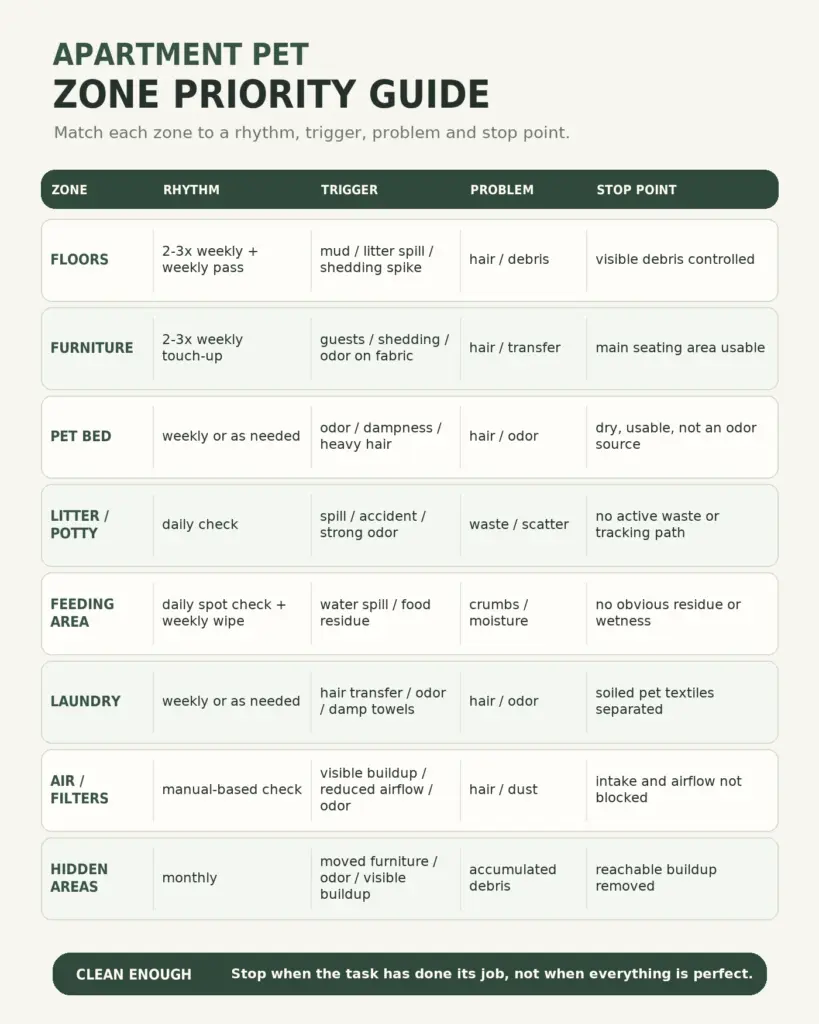
A Zone-by-Zone Frequency Guide
| Zone | Normal Frequency | Trigger | Tool Category | Stop When Clean Enough |
|---|---|---|---|---|
| Floors | 2–3x weekly plus weekly pass | Mud, litter spill, shedding spike | Vacuum/floor tool, microfiber, mop if needed | Visible debris controlled |
| Sofa / furniture | 2–3x weekly touch-up | Guests, shedding, odor on fabric | Fabric hair tool, washable cover | Main seating area usable |
| Pet bed | Weekly or as needed | Odor, dampness, heavy hair | Laundry basket, washable cover | Bed is dry, clean, and not odor source |
| Litter / potty zone | Daily check, weekly reset | Accident, spill, strong odor | Waste system, cloth, compatible cleaner | No active waste or scatter path |
| Feeding area | Daily spot check, weekly wipe | Water spill, food residue | Cloth, bowl cleaning, mat reset | No obvious residue or wetness |
| Laundry | Weekly or as needed | Hair transfer, odor, damp towels | Laundry basket, care-label routine | Soiled pet textiles separated |
| Air / filters | Monthly check or manual-based | Odor, visible pre-filter buildup | Manual-based filter care | Airflow not blocked |
| Hidden edges | Monthly | Moved furniture, odor, pests, buildup | Vacuum attachment, cloth | Buildup removed from reachable area |
This table is the practical heart of the schedule. If you do not know whether to clean something daily, weekly, or monthly, ask what zone it belongs to and whether there is a trigger.
What Does Not Need Daily Cleaning
A sustainable routine needs permission to stop.
Most apartments do not need a full vacuum of every floor every day. They need visible hair and high-transfer spots controlled often enough that the weekly session stays manageable.
Most pet bedding does not need daily washing unless it is wet, soiled, smelly, medically relevant, or used in a special situation. Washing too often can wear covers, create laundry overload, and make the routine harder to sustain.
Most floors do not need wet cleaning every day. Remove dry hair and debris first. Wet cleaning makes sense when there is residue, grime, sticky food, tracked mud, or a surface that needs it according to care instructions.
Most cleaning products should not be layered “just to be safe.” The EPA’s pet label guidance emphasizes reading and following product labels, keeping products away from pets and children, and following precautions such as ventilation or keeping pets away from treated areas when directed. More product is not automatically safer or cleaner.
Most odor-free carpet does not need repeated treatment “just in case.” If there is no active source, no returning odor, and no visible issue, put the area back into routine monitoring.
Clean enough means the task has done its job: the visible mess is controlled, the source is removed, the surface is dry or drying as appropriate, the pet zone is usable, and the problem is not spreading.
Small-Apartment Adjustments
Apartment cleaning is different because the zones overlap.
You may not have a utility room, garage, mudroom, laundry room, or spare closet. Cleaning supplies might live under the sink, beside the entry, in a narrow cabinet, or in one small caddy. That means storage must follow the mess.
If the entryway creates the most dirt, keep a towel or mat there. If the litter path creates scatter, store the quick pickup tool nearby. If pet bedding creates laundry odor, keep a small basket near the bed or cover. If the sofa is the hair hotspot, keep the fabric tool close enough that you will use it.
Shared walls matter too. A daily late-night vacuum may solve hair while creating a neighbor problem. Use timing, quiet tools, and shorter targeted passes when possible.
Shared laundry changes the weekly rhythm. You may need to separate pet textiles, avoid overloading machines, follow fabric labels, and avoid leaving hairy items in shared spaces. This page only sets the cadence; the detailed laundry workflow belongs in the laundry guide when live.
Limited ventilation also changes how you clean. Follow labels for ventilation, drying, and pet re-entry. Do not assume a scented product is solving odor. In a compact room, fragrance can add another layer instead of removing the source.
Landlord-owned surfaces need caution. Carpet, wood floors, upholstery, and built-in materials may have lease or care restrictions. If a mess involves urine, repeated odor, visible damage, or possible deeper material involvement, routine cleaning may not be enough.
Multi-Pet and Heavy-Shedding Adjustments
With more than one pet, the answer is usually not doubling every task. It is scaling the zones that fill fastest.
A two-pet home may need daily waste checks, more frequent hair hotspot passes, a bigger weekly bedding rotation, and a faster litter or potty reset. A heavy-shedding period may temporarily move floor and sofa touch-ups from twice weekly to daily in the worst zones.
Keep the routine cross-pet. Do not split the whole schedule into cat tasks and dog tasks unless the zone truly differs. Hair on the sofa, bedding odor, food residue, wet towels, and floor debris are home-care problems. Species-specific grooming, litter behavior, potty training, and health concerns belong elsewhere.
If one pet creates most of the mess, clean the route that pet uses. The most useful schedule is based on where mess travels, not on equal attention to every room.
If You Miss a Week: How to Recover Without Cleaning Everything
A missed week does not mean the system failed. It means you need a recovery order.
Start with active odor and waste. Scoop, remove trash, handle wet items, check litter or potty areas, and look for obvious accidents. Do not begin with hidden baseboards while an active source is still present.
Next, hit the hair hotspots. Sofa, pet bed, main floor path, rug edge, and laundry-adjacent surfaces usually affect comfort fastest.
Then handle fabrics and bedding. Wash only what is actually hairy, soiled, damp, or smelly enough to need it.
After that, clean floors. Remove dry hair and debris before wet cleaning.
Leave hidden monthly zones for later unless they are causing odor, pests, or visible buildup. Recovery cleaning should restore function first. Deep perfection can wait.
This is how you avoid all-or-nothing cleaning. The routine should help you restart after a messy week, not punish you for having one.
When the Routine Is Not Enough
A schedule is not the answer to every pet-home problem.
If odor keeps returning from the same spot, move into source troubleshooting. If urine smell is involved, surface cleaning may not be enough. If inappropriate urination is new, repeated, or paired with behavior or health concerns, consider pet-specific help.
If carpet, flooring, subfloor, baseboards, or upholstery appear damaged, stop treating it as ordinary weekly cleaning. If a machine smells, loses suction, overheats, or leaves residue, check the manual and maintenance steps. If there is moisture, mold concern, pest activity, or water damage, routine cleaning is not the right category.
The schedule should give you information. If one task keeps reappearing, ask why. The same odor, the same wet mat, the same hairy chair, the same litter path, or the same laundry transfer point is feedback from the apartment.
A Sustainable Weekly Routine
Start smaller than your ambition. Choose one daily reset, one midweek pet-zone pass, one weekly session, and one monthly hidden-zone check. Add triggers separately.
A practical first week might look like this:
- Daily: waste/source check, feeding-area wipe if needed, one visible hair hotspot.
- Wednesday: floor path, sofa edge, litter tracking or entry mat.
- Weekend: fabrics first, dry hair removal, floors, pet zones, supplies, odor check.
- End of month: hidden edges, filters/manual-based equipment care, under furniture.
That is enough to start. The routine can become more detailed after you learn where your apartment actually needs help.
The best weekly cleaning schedule for apartments with pets is not the one with the most tasks. It is the one that keeps normal buildup on a rhythm, responds quickly to triggers, and tells you when to stop.
Sources
- CDC: About Cleaning and Disinfecting Pet Supplies
- EPA: Read the Label First — Protect Your Pets
- AHAM: How to Choose the Best Air Cleaner for Your Home
- Shark Customer Service: Upright Vacuums Maintenance and Most Common Inquiries
- BISSELL Support: CleanView Max / Pet Hair Eraser Allergen Lift-Off — How to Clean & Maintain