Quick Answer: How to Control Pet Odor in an Apartment
If you are dealing with pet odor in apartment living, do not start with an air purifier, room spray, or random cleaner. Start by finding the source.
Pet odor in an apartment usually comes from one of a few places: urine in carpet, litter box odor, pet bedding, soft furniture, dog body odor, hair and surface buildup, dirty floors, or stale room air. Each one needs a different first step.
A urine smell near carpet needs source cleanup. A stale sofa smell needs fabric and cushion attention. A dog smell strongest around the bed may start with bedding and dog-specific care. A litter box smell needs litter-area management. Whole-room stale air may need ventilation and filtration, but only after obvious surface sources are handled.
Use this order:
- Diagnose where the smell is strongest.
- Match the odor to the likely source.
- Act with the right first step before buying more products.
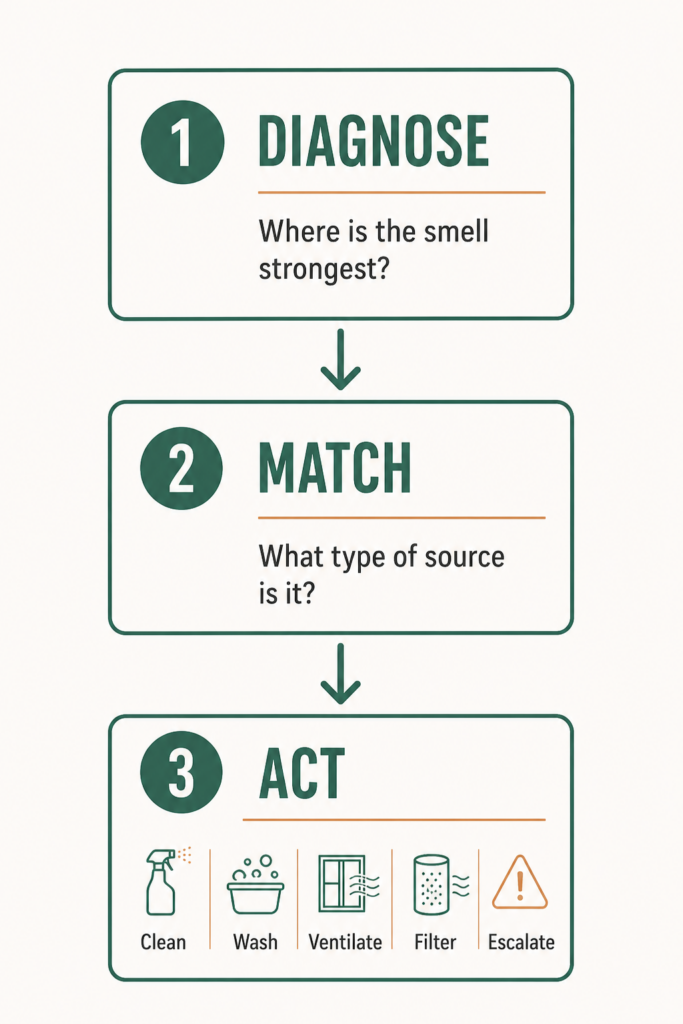
Table of Contents
Why Pet Odor Can Be Harder to Control in Small Apartments
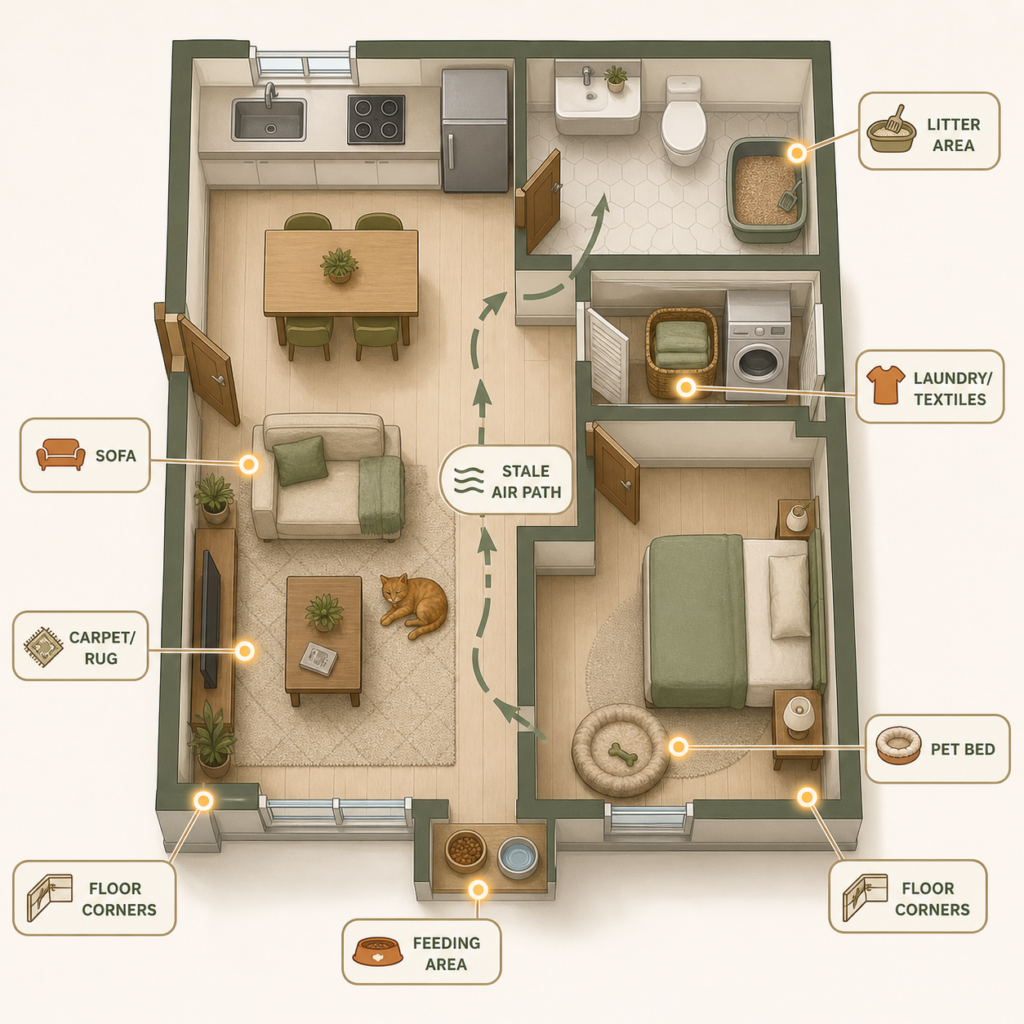
In a small apartment, odor sources are often close to the places where people sleep, eat, work, and relax. The litter box, pet bed, sofa, laundry basket, feeding area, and main walking path may all share one connected living space.
That makes source isolation harder. If the pet bed smells, the sofa may seem to smell. If the litter box is close to the living room, the whole apartment may feel stale. If there are fewer separate rooms, there are fewer places to move washable items, dry rugs, separate the pet, or air out a cleaned area.
Common apartment constraints include:
- Small rooms and connected living areas
- Limited ventilation options
- Carpet or area rugs that cannot easily be replaced
- Soft furniture used by both people and pets
- Litter boxes placed near daily living spaces
- Pet bedding stored in bedrooms or closets
- Limited outdoor space for airing washable items
- Renter restrictions on deep cleaning, carpet work, or product use
- Limited storage for cleaning tools and replacement filters
That is why a general “clean more often” answer is not enough. The first job is to identify which source is contributing most to the smell.
Start With the Odor Source, Not the Product
Most pet odor products solve only one part of the problem. For pet odor in apartment spaces, the right first step depends on whether the smell is coming from a surface, a textile, a pet area, or the air.
An enzyme cleaner may help with certain urine or organic stain situations when used according to the label, but it will not fix a dirty litter area, a washable pet bed, or stale air from poor ventilation. A vacuum can remove hair, dust, dander, and debris from surfaces, but it will not neutralize urine below a carpet surface. An air purifier may reduce some airborne particles, but it cannot clean a sofa cushion or remove a hidden accident from the floor.
The best first question is not “What should I buy?”
It is:
Where is the odor coming from?
Pet Odor Source Matrix
| What You Notice | Likely Source | Where to Check | Best First Action | What Probably Will Not Fix It | Next Step |
|---|---|---|---|---|---|
| Sharp urine smell near carpet or rug | Urine in fibers, backing, or nearby material | Carpet edges, rug pad, corners, previous accident spots | Blot fresh moisture, use a label-directed pet urine cleaner, avoid mixing products | Room spray, candle, air purifier alone | Use a carpet-specific urine cleanup workflow. |
| Odor returns after visible cleaning | Remaining contamination or missed nearby material | Carpet backing, rug pad, baseboard edge, furniture gap | Re-check the exact source after the surface is fully dry | Repeated fragrance or light misting | Review cleaner safety before repeating treatments. |
| Stale smell from sofa or chair | Fabric, cushions, pet-contact areas, settled debris | Favorite pet seat, cushion seams, throws | Vacuum fabric, wash removable covers, check care labels | Air purifier alone | Clean fabric and nearby surfaces first. |
| Dog smell strongest near bedding | Pet bed, blanket, crate mat, nearby floor | Dog bed, crate pad, washable covers | Wash bedding and clean nearby floor surfaces | Only deodorizing the room | Use the dog-specific odor workflow if the issue is dog-specific. |
| Litter smell near living area | Litter box setup or maintenance | Box, mat, scoop area, nearby trash | Scoop, clean the box area, review placement and litter setup | Air freshener beside the box | Use a litter-area setup workflow for cat-specific odor. |
| Hair, dust, and debris on floors or fabric | Surface buildup that should be removed during diagnosis | Corners, baseboards, under furniture, rugs, sofa fabric | Vacuum and clean high-contact surfaces before treating the air | Odor spray without surface cleaning | Add high-contact areas to the prevention framework. |
| Whole-room stale smell after surfaces are clean | Limited ventilation, airborne particles, or some odor compounds | Main living area, bedroom, litter area | Ventilate if possible; consider filtration after source control | Expecting HEPA alone to solve every odor | Compare particle filtration with odor-control media before buying. |
| Smell comes back every few days | Maintenance routine gap | Bedding, floors, litter area, laundry, filters | Build a light repeatable cleaning rhythm | One-time deep clean only | Create a simple recurring cleaning rhythm. |
A One-Minute Decision System
Ask these questions in order.
1. Where is the smell strongest?
- Carpet or rug: check for urine, spills, damp backing, or old accident spots.
- Sofa or bed: check throws, cushion covers, blankets, and pet sleeping areas.
- Litter area: check the box, mat, scoop storage, and nearby trash.
- Near the pet: consider whether the issue is pet-specific, such as dog body odor.
- Whole room: look for surface sources first, then think about airflow and filtration.
2. Does the smell point to a source or to stale air?
- A sharp, localized smell usually points to a source.
- A stale, dusty smell may involve textiles, floors, and settled material.
- A whole-room odor after cleaning may involve ventilation, airborne particles, or odor compounds.
3. What should happen first?
- Source contamination: remove or treat the source.
- Surface contamination: clean floors, fabric, or furniture.
- Textiles: wash bedding, blankets, covers, and washable mats.
- Airborne particles: vacuum and consider filtration.
- Gaseous odor compounds: source control first, then consider activated carbon.
- Recurring maintenance failure: build a repeatable routine instead of doing one large cleanup.
Urine or Accident Odor
Urine odor is easy to handle poorly because the visible surface can look cleaner while odor remains in carpet, rug backing, nearby fabric, or another material close to the accident.
For a fresh accident, the first step is usually to remove as much liquid as possible before adding any product. Manufacturer directions for pet stain and odor removers commonly emphasize blotting, applying enough product to reach the affected area, allowing contact time, repeating if needed, and testing surfaces first. Follow the specific product label instead of assuming every cleaner works the same way.
Do not mix cleaners. This is especially important around urine cleanup, where people may reach for bleach, ammonia-based products, vinegar, disinfectants, or multiple odor removers at once. The CDC warns not to mix bleach with other cleaners or disinfectants, and its ammonia guidance warns that household cleaners should not be mixed.
If urine odor is concentrated in apartment carpet, the next step is to determine whether the problem is limited to the surface fibers or may involve backing, padding, baseboards, or nearby materials.
For cleaner safety mistakes and urine-specific product choices, slow down before repeating treatments or combining products. The wrong second product can create a bigger safety problem than the original odor.
Dog Smell in a Small Apartment
If the smell is strongest around a dog bed, crate mat, blanket, sofa spot, or entry area, start there. Wash what is washable, vacuum fabric and surrounding floors, and check whether the odor is coming from the dog’s resting area rather than the whole apartment.
This page should stay focused on the home environment. If the issue is dog-specific, such as recurring dog body odor, grooming routine, or dog odor in an apartment, the more focused resource is here: ApartmentDogExpert dog odor guide.
Cat Litter and Cat Odor Boundaries
Litter odor can make a whole apartment seem dirty even when the rest of the home is clean. Check the litter box, litter mat, scoop, trash storage, and nearby floor before treating the whole room.
This guide should not become a full litter-box article. For cat-specific litter odor setup and maintenance, use: IndoorCatExpert litter box odor control.
If the reader is specifically comparing litter products for odor control, that intent belongs here: IndoorCatExpert cat litter odor control guide.
Pet Hair, Dander, and Dust Buildup
Pet hair is not automatically the odor source. But visible hair, dust, dander, tracked-in debris, and small bits of litter or soil are useful signs that high-contact surfaces need attention before you treat the air.
Start with the places pets touch most:
- Favorite sofa cushions
- Rugs and runners
- Baseboards and corners
- Under the bed
- Around food and water bowls
- Litter box or potty areas
- Pet beds and blankets
Vacuuming helps most when it is targeted. A quick pass through the open floor may miss the areas where surface buildup collects.
Carpet, Rugs, and Soft Furniture
Carpet, rugs, and upholstered furniture deserve special attention because odor problems can involve more than the visible top layer. A surface may look clean while odor remains in backing, seams, cushion edges, a rug pad, or a nearby material.
For carpet and rugs:
- Identify whether the odor is localized or general.
- Check edges, corners, and areas where pets rest.
- Remove dry debris first.
- Blot moisture instead of rubbing it deeper.
- Use cleaners only according to the label.
- Let the area dry fully.
For soft furniture:
- Remove and wash covers if the care label allows it.
- Vacuum seams and cushion gaps.
- Wash pet throws instead of repeatedly deodorizing them.
- Be careful with wet cleaning on cushions that dry slowly.
If odor returns after the visible surface has been properly cleaned and fully dried, contamination may remain below the surface or in another nearby material. At that point, stop adding fragrance and re-check the source.
Laundry, Bedding, and Pet Blankets
Pet bedding is often the easiest source to miss because it may smell normal up close but affect the room over time.
Prioritize washable items:
- Pet beds with removable covers
- Crate mats
- Blankets
- Sofa throws
- Pillow covers used by pets
- Small rugs near food bowls or litter areas
- Human bedding if pets sleep on the bed
Shake or remove loose hair before washing when practical, and follow appliance and fabric care directions. If pet hair keeps moving from bedding to clothes, the issue may be a laundry workflow problem, not just an odor problem.
Floors and Daily Surface Buildup
Hard floors can still need attention around edges, seams, mats, and feeding areas. In apartments, odor-related surface buildup is easy to miss in places normal cleaning skips over:
- Under food and water bowls
- Around litter mats
- Near entry doors
- Beside the sofa
- Around crate corners
- Along baseboards
- Under low furniture
Clean visible debris first, then use a floor-safe cleaner according to the label. Avoid soaking floors, especially around seams, baseboards, laminate, or areas where moisture could move underneath.
Keep this framework short and repeatable. The goal is to prevent pet odor in apartment living from building up again without turning every day into a deep-cleaning project.
Air Purifiers: What They Can and Cannot Do
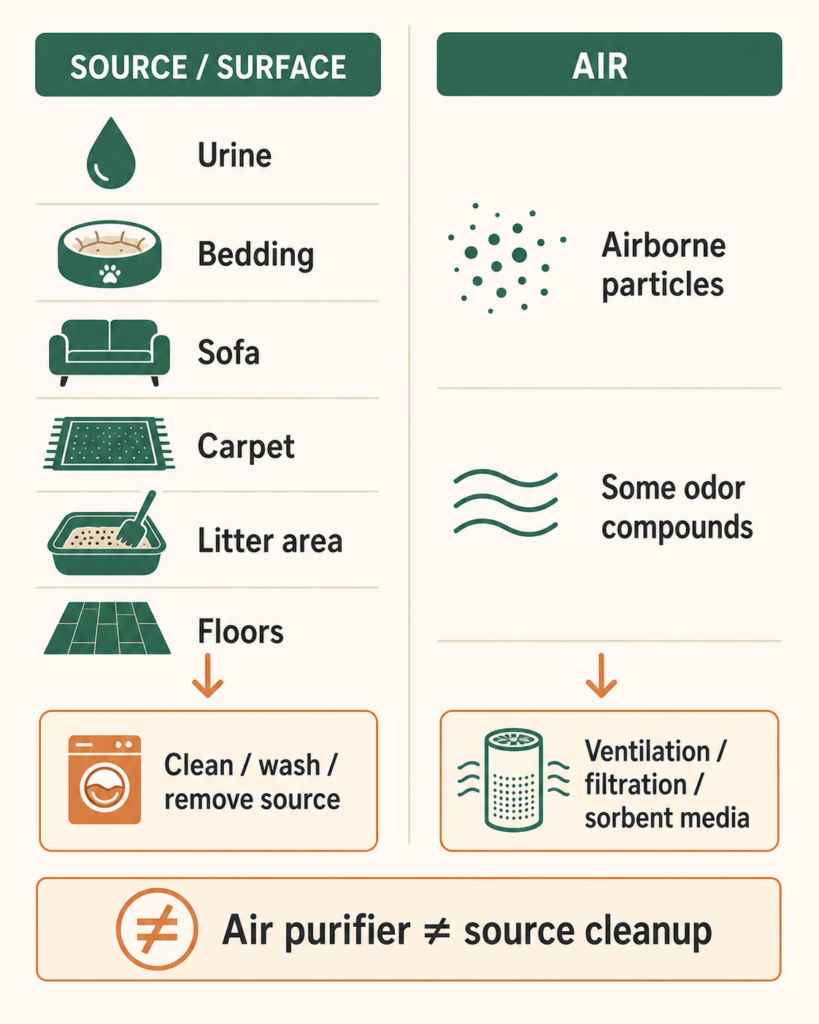
An air purifier can help with some airborne particles, but it should not be treated as the first or only solution for pet odor.
The EPA says the most effective ways to improve indoor air are to reduce or remove pollutant sources and ventilate with clean outdoor air when possible. It also says filtration can be a supplement to source control and ventilation, and that portable air cleaners and HVAC filters can reduce indoor air pollution but cannot remove all pollutants.
For pet homes, the key distinction is:
- Particle filtration: helps with particles such as dust and some airborne dander.
- Gas or odor control: requires a different approach, often involving sorbent media such as activated carbon.
HEPA filtration is mainly about particles. It should not be described as removing all pet odor. EPA guidance notes that larger particles such as some animal dander often settle on surfaces and cannot be removed by an air cleaner unless disturbed and resuspended. EPA also notes that air cleaners without special media such as activated carbon or alumina will not remove gaseous pollutants.
For the mechanism boundary, compare HEPA vs activated carbon for pet odor.
CADR can matter when choosing an air purifier. AHAM describes CADR as the volume of filtered air an air cleaner delivers, with separate scores for smoke, pollen, and dust. AHAM also gives a room-sizing rule of thumb: the CADR should be at least two-thirds of the room’s area.
Use an air purifier after asking:
- Have I cleaned the main odor source?
- Is the odor coming from surfaces or fabrics?
- Do I need particle filtration, odor-gas control, or both?
- Does the unit include meaningful odor-control media?
- Can I afford and remember filter replacements?
Before buying, compare particle filtration with odor-control media and make sure the purifier fits the room and maintenance budget.
What Not to Mix or Use Around Pet Odor
Do not mix cleaning products, do not combine bleach with other cleaners or disinfectants, and do not assume a stronger-smelling product is the better solution.
Follow product labels, ventilate when using cleaners, and keep pets away from treated areas until the product directions say the area is ready. This is only a safety guardrail. If urine odor remains after a label-directed cleaning attempt, reassess the source before adding a second product.
Short Prevention Framework
A full cleaning schedule is not needed here. For this pillar page, use a simple prevention framework:
- Source: scoop litter, handle accidents quickly, wash pet bedding.
- Surfaces: vacuum high-use areas, clean around bowls and mats, wipe hard floors where pets rest.
- Textiles: wash throws, covers, and blankets before odor builds up.
- Air: ventilate when possible and replace purifier or HVAC filters on schedule.
- Review: if odor returns, look for the source instead of adding fragrance.
When to Take the Next Step
| Situation | Better Next Step |
|---|---|
| Cat urine smell is in carpet | Use a carpet-specific urine cleanup workflow. |
| You are unsure what products are unsafe around urine | Review urine-cleaning safety before repeating treatments. |
| You are confused about HEPA vs carbon | Compare particle filtration with odor-control media before buying. |
| You are ready to compare air purifiers | When the source-control work is clear, compare air purifiers for pet odor in apartments. |
| Odor keeps coming back because the routine is inconsistent | Use a weekly cleaning schedule for apartments with pets to build a simple recurring cleaning rhythm. |
| The problem is specifically dog body odor | Use a dog-specific odor workflow. |
| The problem is specifically litter box odor | Use a litter-area setup workflow. |
FAQ
What is the fastest way to reduce pet odor in an apartment?
Find the strongest source first. Wash pet bedding, remove fresh accidents, vacuum high-use areas, clean litter or potty zones, and ventilate if possible. If the odor source remains, room spray or an air purifier will only cover part of the problem.
Will an air purifier remove pet odor?
An air purifier may help with some airborne particles, and activated carbon may help with some gaseous odor compounds, but it will not clean urine in carpet, dirty bedding, litter box buildup, or odor trapped in furniture. Source control comes first.
Is pet hair the cause of pet odor?
Not always. Pet hair is better treated as a sign that high-contact surfaces need cleaning. Hair, dust, dander, and debris should be removed during diagnosis before assuming the problem is only in the air.
When should I stop trying DIY cleaning?
Consider escalation if the smell is sharp, recurring, strongest near carpet or flooring, or remains after careful surface cleaning and full drying. Renters should also consider lease rules before attempting deep carpet or flooring work.
How to Diagnose Pet Odor in Apartment Living by Zone
Before buying another odor product, walk the apartment by zones. A small home often makes several sources feel like one general smell, but each zone gives different clues. Carpet and rugs usually hold odor near a traffic path, pet nap spot, door, litter area, or accident location. Sofa and upholstery odor is more likely to be strongest when you sit down, move a cushion, or warm fabric with body heat. Pet bedding odor often returns quickly after the floor has been cleaned because the washable cover or insert is still carrying the source.
Litter-area odor is different from whole-apartment pet odor. If the smell is sharpest near the box, trash can, scoop, mat, or nearby wall, solve that small zone first instead of treating every room. A dog resting area can create a similar local pattern: the rug, bed, crate pad, blanket, and wall corner around the resting spot may smell stronger than the center of the room. Feeding areas can add stale food, damp mat, or trash odor that gets mistaken for pet body odor.
If the odor is centered on bowls or the feeding mat, follow the pet-bowl cleaning workflow before treating the whole room.
Laundry and textiles deserve their own check. Blankets, washable covers, towels, pet clothing, bedding, and hamper piles can carry odor from one room to another. If the living room smells better after cleaning but the bedroom starts smelling musty, the transfer route may be textiles, not air. Hard floors and baseboards are usually easier to clean, but edges, seams, under-furniture dust, and dried splashes can still hold odor cues. Whole-room air should be considered after source zones are checked, not before.
Source Odor, Surface Odor, Textile Buildup, and Air
The fastest mistake is treating the wrong category. A source problem means the material causing the odor is still present: urine residue, damp bedding, dirty litter waste, spoiled food, or a loaded pet bed. A surface problem means the odor is on the accessible surface, such as a washable cover, hard floor, or rug face. Textile buildup means repeated small transfers have accumulated in fabric even though there is no single obvious accident. An air problem means particles or gaseous odor compounds are moving through the room after the source has already been reduced.
That distinction changes what to do first. An air purifier cannot remove urine residue from carpet. A room spray cannot clean a pet bed. A vacuum helps with hair, dander, dust, and loose debris, but it is not a urine-source treatment. An enzyme cleaner may be the right product class for some organic odor sources, but it still has to reach the affected material and be used according to the label. Laundry solves washable textiles, but it will not fix odor in carpet backing or a sofa cushion insert.
Use this order: source first, surface second, textiles third, air last. If the smell improves only while a fan, candle, spray, or purifier is running, the source may still be present. If the smell returns after pets lie down again, the resting zone may still be loaded. If the smell follows blankets or clothes, treat laundry and storage rather than the whole room.
Small-Apartment Scenarios That Change the First Move
Studio apartment with a litter area near the sofa: do not assume the sofa is the source just because the sitting area smells. Check the litter box, mat, trash, scoop storage, nearby floor edge, and any textile between the box and sofa. If the litter zone is the peak odor point, the next step belongs to litter-area hygiene rather than room-wide deodorizing.
One-bedroom apartment with dog bedding in the bedroom: if the bedroom smells more noticeable in the morning, start with the dog bed, blanket, crate pad, rug, and washable covers. Cleaning the living room floor first may not change the sleeping-area source.
Rental apartment with recurring carpet odor: if odor returns after the surface dries, avoid repeating random products. Recheck whether the source is a fresh surface issue, old residue, or a deeper carpet concern. Keep this page at the source-identification level; detailed carpet urine and padding decisions belong to the urine-specific guides.
Multi-pet apartment with shared textiles: when beds, throws, sofa covers, and laundry move between rooms, odor can travel with fabric. A small textile rotation may solve more than another room spray: one washable cover on the pet resting spot, one laundry bin for pet textiles, and one regular dry-out point for damp towels or cleaning cloths.
If the Apartment Still Smells After Cleaning
If cleaning did not work, do not immediately repeat the same step. First ask what changed. Did the smell improve for a few hours and return after drying? Did it move from one room to another? Is it strongest near a pet bed, litter area, carpet spot, trash can, or hamper? Is the odor only noticeable when the apartment is closed up? Each answer points to a different next check.
- Missed source: inspect pet beds, sofa seams, rug edges, litter mats, feeding mats, and under furniture.
- Untreated textile: check washable covers, blankets, towels, bedding, and laundry bins.
- Recurring accident: pause broad deodorizing and identify whether a new urine event is happening.
- Deeper carpet concern: stop adding surface products and move to a urine-carpet decision path.
- Ventilation limitation: improve source control first, then consider air cleaning as support rather than the main fix.
If You Can Only Buy One Product Class First
Choose by source, not by popularity. If the issue is loose hair, dander, and debris around pet resting zones, a vacuum or fabric hair tool may give the biggest first improvement. If the issue is a fresh urine accident on a compatible surface, a pet urine cleaner used by label is more relevant than an air purifier. If the issue is bedding, throws, or washable covers, laundry handling may matter more than another bottle. If the source is reduced but the room still carries general odor, an air purifier with the right filter approach may be a support tool. If odor is mainly in a closed trash or litter area, storage, disposal, and zone cleaning come first.
This is why the page starts with Diagnose → Match → Act. The best product class is the one that matches the odor source you actually have.
Sources
- EPA: Air Cleaners and Air Filters in the Home
- EPA: Will air cleaners reduce health risks?
- EPA Residential Air Cleaners Technical Summary
- AHAM Air Filtration Standards
- AHAM Directory
- CDC: Cleaning and Disinfecting with Bleach
- CDC: Ammonia
- Poison Control: What’s That Smell?
- Rocco & Roxie Stain & Odor Eliminator Directions
- BISSELL: How to Remove Dog and Cat Urine Smell From Carpet
- Nature’s Miracle Urine Destroyer Plus