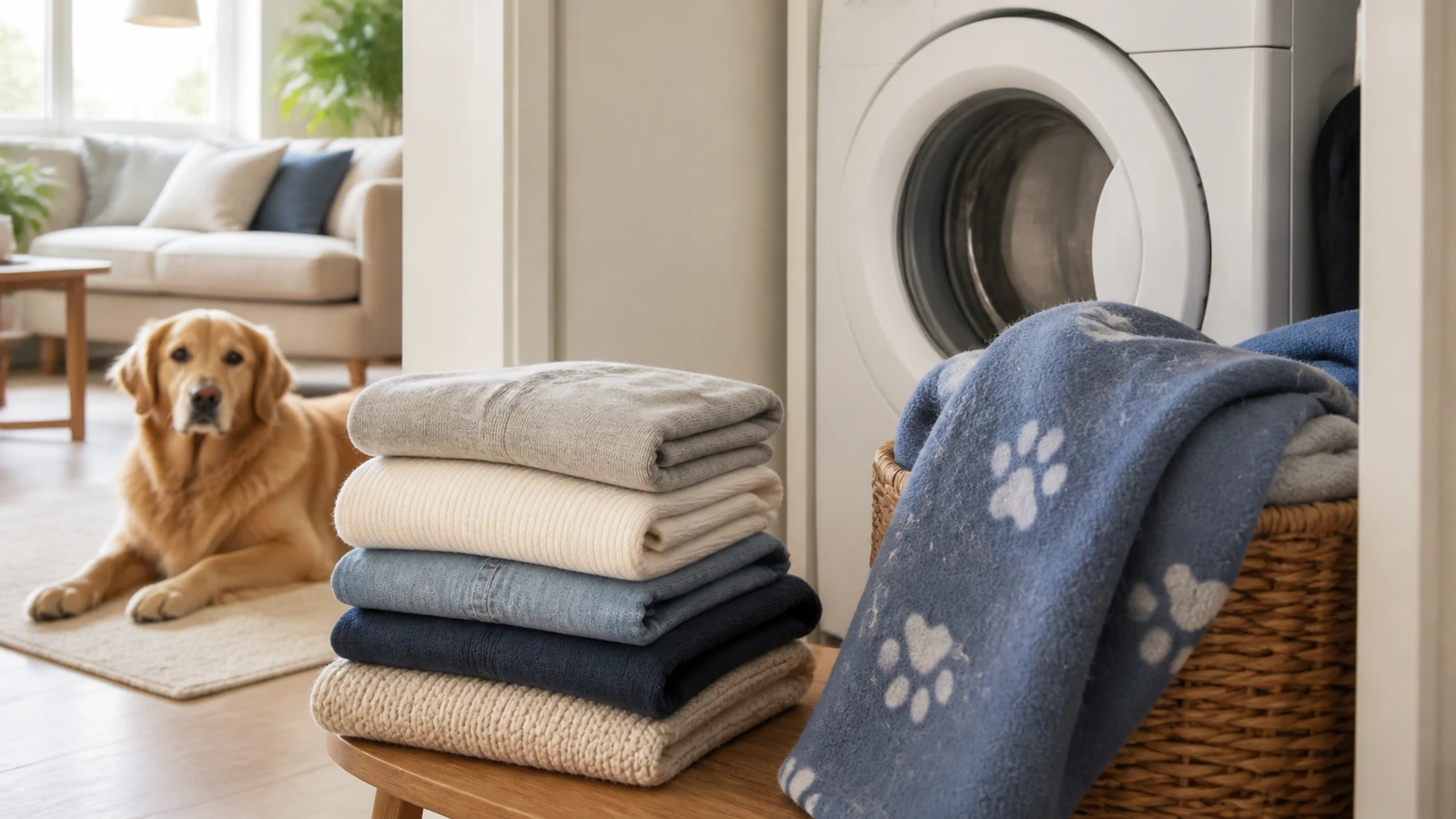
Pet hair in laundry is frustrating because the washing machine is often the wrong first step. Hair can cling to dry fabric, loosen in the washer, settle back onto clothes, collect in the drum, or move into the next load if the machine and lint system are not cleaned afterward. In a small apartment, the problem can feel even worse because clean laundry, pet bedding, hampers, drying racks, and pet resting spots often share the same few rooms.
The best way to remove pet hair from laundry is to treat laundry as a workflow, not a single wash cycle. The goal is to reduce the hair load before washing, give fabrics enough room to release hair, use the dryer and lint screen as a capture stage when the care label allows it, and prevent clean items from picking hair back up after they leave the machine.
If pet hair is also building up on floors, furniture, rugs, and corners before laundry even starts, use the broader guide to pet hair in apartments first. This page focuses only on the laundry side: clothes, bedding, blankets, washable covers, washer care, dryer lint cleanup, and re-transfer prevention.
Table of Contents
Quick Answer
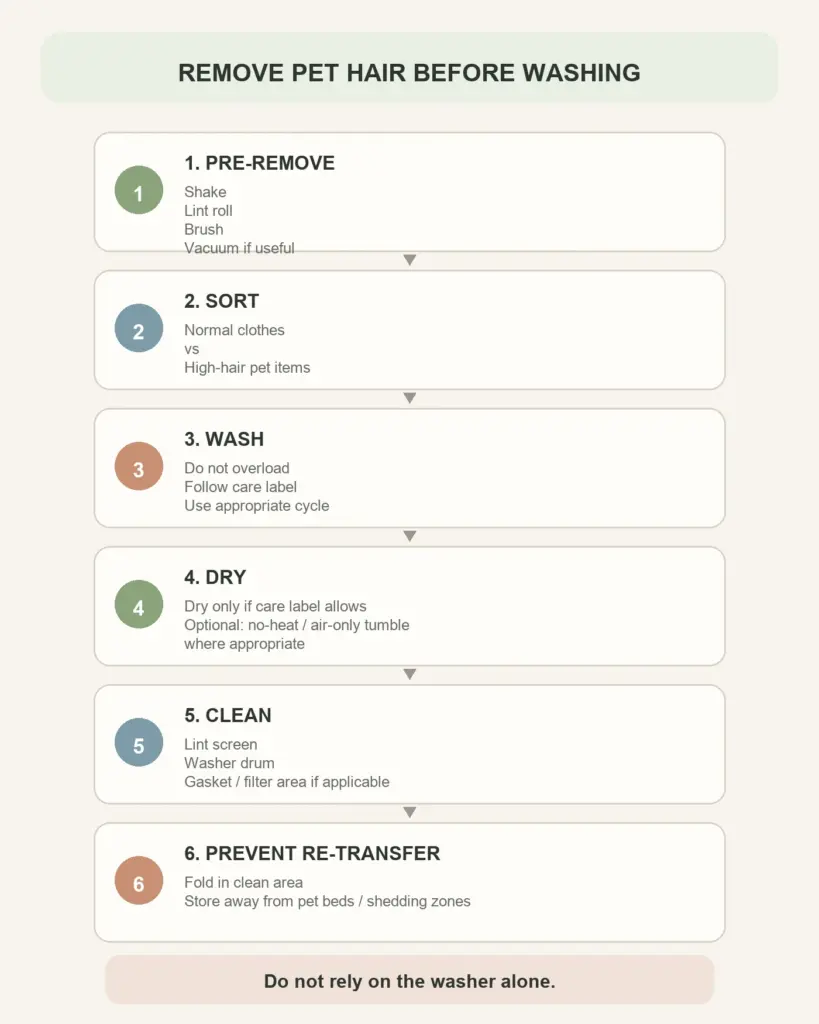
To remove pet hair from laundry, do not rely on the washer alone. First, remove as much dry hair as practical with shaking, a lint roller, a brush, tape, or a quick no-heat dryer tumble when the fabric and dryer manual allow it. Then sort items by hair load and fabric type, wash without overloading the machine, dry according to the care label, clean the lint screen, and wipe or clear hair from the washer drum, gasket, or filter area if your machine design requires it.
The simplest apartment-friendly order is:
- Remove loose dry hair before washing.
- Keep heavily hairy pet bedding separate from normal clothes.
- Do not overload the washer.
- Use the dryer as a lint-capture stage when the care label allows.
- Clean the lint screen after the load.
- Check the washer drum, gasket, and filter area if hair remains.
- Store clean laundry away from pet beds, sofa blankets, and active shedding zones.
This works better than throwing everything into one big wash and hoping detergent solves it. Detergent can clean soil, but pet hair is a physical debris problem. You need removal, movement, capture, and cleanup.
Why Pet Hair Survives the Washing Machine
Pet hair survives washing because it does not behave like ordinary dirt. Dirt dissolves, suspends, or rinses away more easily. Hair has length, texture, static cling, and a tendency to wrap into fabric fibers. When hair enters the washer already stuck to clothes, bedding, fleece, towels, or couch covers, the machine has to loosen it, move it through water, and keep it from settling back somewhere else.
Some appliance guidance points to static cling and fabric texture as part of the problem. GE Appliances notes that pet hair can remain in the tub and on clothes after a wash cycle because of static cling or electrical attraction, especially with synthetic fibers and napped or brushed fabrics. That helps explain why black leggings, fleece blankets, knitwear, and soft pet blankets often look worse than smooth cotton shirts.
The washer also has a practical limit. If a large amount of dry hair enters the drum, some hair may rinse away, some may cling to fabric again, and some may remain inside the machine. Maytag says excess pet hair can collect in a washer filter if enough debris builds up, and wet clumps may affect performance if caught in the drain line. That does not mean one hairy load will destroy a washing machine. It does mean heavy hair loads should be reduced before washing whenever possible.
The dryer has a different job. As clothes tumble, loose fibers and hair can move toward the lint screen. That is why many appliance instructions put a no-heat tumble before or after washing. But the dryer only helps if the item can safely go in the dryer, the lint screen is clean, the load has room to tumble, and the screen is cleaned afterward.
For pet owners in apartments, the problem is not just the machine. It is the whole path:
- Hair starts on clothes, bedding, pet blankets, sofa covers, and towels.
- Hair enters the hamper.
- Hair transfers between items before washing.
- Hair loosens in the washer.
- Hair moves to the dryer lint screen or stays on fabric.
- Hair remains in the drum, gasket, lint trap, or laundry area.
- Clean laundry picks up new hair from the bed, sofa, floor, or pet sleeping area.
Good laundry control interrupts that path at several points.
The Best Order: Remove Hair Before You Wash
The most important shift is this: remove dry hair before water gets involved. Once pet hair is wet, it can clump, smear into fabric, and become harder to collect cleanly. Dry removal is not glamorous, but it is the stage that makes every later step easier.
A good pre-wash routine does not need a laundry room or a cabinet full of tools. In a small apartment, choose one or two simple tools that fit your space:
- A lint roller for clothes and dark fabrics.
- A reusable fabric brush for coats, pants, bedding edges, and washable covers.
- A rubber glove or dry microfiber cloth for larger fabric surfaces.
- Packing tape or masking tape in a pinch.
- A handheld vacuum or upholstery attachment if the item is large and dry.
- A short no-heat dryer tumble if the fabric care label and dryer manual allow it.
The goal is not perfection. The goal is to keep the heaviest loose hair from entering the washer.
This matters most for pet bedding, fleece blankets, sofa covers, and clothes worn while brushing, cuddling, or bathing pets. If you wash those items without pre-removal, the washer becomes the first hair-capture tool. That is usually the least efficient place to start.
A useful rule: if you can see loose hair sitting on the fabric surface, remove some of it before washing. If the hair is embedded deep in fleece or knit texture, accept that pre-removal may reduce the load rather than eliminate it.
Step 1: Dry-Remove as Much Hair as Possible
Start with the item dry. Shake it outdoors if you have a balcony, patio, or permitted outdoor area. If you do not, shake gently over a bathtub, shower stall, or easy-to-clean hard floor. Avoid shaking heavily hairy bedding in a small bedroom where the hair will settle onto clean laundry or bedding.
For clothes, use a lint roller or clothing brush before the item goes into the hamper. This is especially useful for black pants, leggings, work clothes, uniforms, and sweaters. A few passes before washing can prevent hair from moving to the rest of the load.
For bedding, work in zones. Roll or brush the top surface first, then the edges, then the underside if it touched the floor or pet bed. Pet hair often collects along blanket folds and pillow edges, not just the visible center.
For removable upholstery covers, vacuum or brush while the cover is still on the cushion if that gives you tension. Loose fabric can bunch up and make hair harder to lift. Once the heaviest hair is removed, take the cover off and check seams or corners before washing.
For pet bedding, be more aggressive. Pet beds and blankets are often the highest-hair items in the home. Brush, shake, or vacuum them separately before they enter the washer. If the care label allows machine washing, wash pet bedding apart from normal clothes so it does not seed the entire load with hair.
Some appliance guidance supports using the dryer before washing, but only with care. Maytag describes a dry-wash-dry method where hair-covered clothes are tumbled on a no-heat setting before washing so loose pet hair can be caught by the lint screen. GE Appliances similarly suggests a 10-minute no-heat Air Fluff cycle before washing for items covered with pet hair.
That does not mean every hairy item belongs in the dryer first. Do not use heat on items that are not dryer-safe. Do not put damp, soiled, oily, or chemically treated items into the dryer unless the care label and appliance guidance support it. For delicate fabrics, embellished items, wool, some athletic fabrics, or anything labeled line-dry only, use manual dry removal instead.
Step 2: Sort by Hair Load and Fabric Type
Sorting laundry by color is not enough when pets are involved. Sort by hair load and fabric behavior too.
A low-hair load might include smooth cotton shirts, socks, pajamas, or lightly worn clothes that picked up a small amount of hair. A medium-hair load might include everyday clothes worn around pets, washable throws, or pillowcases from a pet-friendly bed. A high-hair load includes pet bedding, sofa covers, fleece blankets, towels used after pet baths, and anything visibly coated.
High-hair items should not be washed with normal clothes. If you mix a hairy pet blanket with dark shirts, the blanket may release hair and the dark shirts may display it. If you mix fleece with smooth clothes, the fleece may hold hair and share lint. If you wash a dog bed cover with work clothes, the work clothes may leave the dryer looking worse than when they entered.
Fabric type matters because some materials hold hair more stubbornly:
| Item Type | Pet Hair Behavior | Better Laundry Approach |
|---|---|---|
| Smooth cotton | Releases hair more easily than textured fabrics | Pre-roll visible hair, wash normally, dry if care label allows |
| Dark clothes | Shows every pale hair and lint piece | Lint roll before and after, avoid washing with hairy bedding |
| Fleece and synthetics | Can trap hair and static | Pre-remove carefully, avoid overloading, use dryer only if care label allows |
| Pet bedding | Heavy hair load and odor potential | Wash separately, pre-remove hair, check machine after |
| Upholstery covers | Hair collects in seams and corners | Brush or vacuum before removing, wash by care label |
| Towels | Can trap and transfer hair | Keep pet towels separate from bath towels when possible |
In an apartment, you may not have space for many hampers. You do not need them. Use one main hamper and one small “pet-heavy laundry” bag, bin, or washable tote. The separation is the important part.
Step 3: Use the Washer Without Overloading It
Once the dry hair load is reduced and sorted, the washer can do its job better. The main washer mistake is overloading. A packed drum leaves fabrics pressed together, which limits movement. If the clothes cannot move, hair has fewer chances to loosen and rinse away.
Use the cycle, water temperature, spin setting, and detergent amount recommended by the fabric care label and washer manual. More detergent is not a pet-hair solution. Too much detergent can leave residue, and residue may make fabrics feel less clean. Pet hair removal depends more on physical movement and capture than on extra soap.
For high-hair items, choose a smaller load. The item needs room to unfold, agitate, tumble, or circulate depending on washer type. A bulky pet blanket crammed into a full washer may come out wet, matted, and still hairy.
After washing a high-hair load, inspect the drum. In a front-load washer, look around the gasket. In a top-load washer, look along the tub wall and bottom area. If your washer has an accessible filter or pump filter, follow the owner’s manual rather than guessing. Maytag’s washer-care guidance recommends consulting the owner’s manual because filter location varies by model.
If hair is visible in the drum, wipe it with a damp cloth after the load. Letting it dry in place can make it easier to vacuum later, but leaving hair there before the next load can transfer it to clean clothes.
For renters and shared laundry users, be extra considerate. If a shared washer has visible hair after your load, wipe the drum or gasket if you can do so safely and cleanly. Do not leave pet hair for the next person. If you use a laundromat, carry a small lint roller, a microfiber cloth, and a bag for lint or hair cleanup.
Step 4: Use the Dryer to Capture Loose Hair
The dryer can help because tumbling and airflow can move loose hair toward the lint screen. But the dryer is not magic. It works best when the load is not overloaded, the lint screen is clean, and the fabric can safely be dried.
For dryer-safe clothes, a normal dry cycle after washing may collect some remaining hair in the lint screen. For dry, hair-covered items before washing, a short no-heat or air-only cycle may loosen and capture some hair before the wash. This is the method described by both Maytag and GE Appliances, but it should be treated as an option, not a universal rule.
Always check:
- Is the item dryer-safe?
- Does the care label allow tumble drying?
- Is the item dry enough for a pre-wash air-only tumble?
- Is the lint screen clean before starting?
- Is the load small enough to tumble freely?
- Are there stains, oils, or substances that should not go in a dryer?
Dryer sheets and dryer balls are often mentioned for pet hair. They may help reduce static, which can make some hair easier to release, but they are not the same as removing a heavy hair load. Maytag says dryer sheets and dryer balls can help reduce static and allow pet hair to loosen so the lint trap can capture it. That is a static-control role, not a guarantee that hair-covered laundry will come out clean.
If you use dryer sheets, make sure they are compatible with your fabrics and appliance. Some performance fabrics, towels, or pet items may not benefit from fabric softener residue. If you use wool dryer balls or reusable dryer balls, check whether they are appropriate for the load and whether they actually help your fabrics. Do not add products simply because a hack list says so.
After drying, remove clothes promptly. If clean laundry sits in the dryer with the door open while pets walk through the laundry area, it can pick up new hair before you fold it.
Step 5: Clean the Lint Screen and Machine
The lint screen is where much of the dryer-stage hair should go. If it is full, blocked, or coated with residue, it cannot do that job well.
Whirlpool recommends removing debris from the lint trap after each load and cleaning the lint trap slot as needed. Whirlpool also notes that fabric softener and detergent residue can build up on the lint screen over time, and that deeper cleaning with a nylon brush, detergent, and water may be needed when residue is present.
For pet laundry, make lint-screen cleaning automatic:
- Clean the lint screen before the load.
- Run the dryer only with the lint screen properly in place.
- Clean the lint screen after the load.
- If the screen looks waxy, coated, or slow to pass air, follow your dryer manual for deeper cleaning.
- Check the lint trap slot if hair falls into it.
Do not rinse loose lint off the screen as your first step. Whirlpool’s product help says wet lint is hard to remove. Roll lint off with your fingers first, then wash residue only when the manufacturer guidance calls for a deeper clean.
Washer cleanup matters too. After washing hairy items, check the drum, door gasket, detergent area, and any accessible filter system described by your manual. Do not remove panels or parts unless the manual instructs you to. Do not pour random cleaners into the machine to “dissolve” hair. Hair is physical debris; it usually needs collection, wiping, rinsing, or filter maintenance.
In a small apartment, keep a simple machine-cleanup kit near laundry supplies:
- One microfiber cloth.
- A small trash bag or lint bag.
- A lint roller.
- A brush or vacuum attachment if you own one.
- Your washer/dryer manual link saved on your phone.
That is enough for most loads.
Clothes vs Bedding vs Blankets
Different laundry items need different handling. A single routine for every fabric is why pet hair keeps coming back.
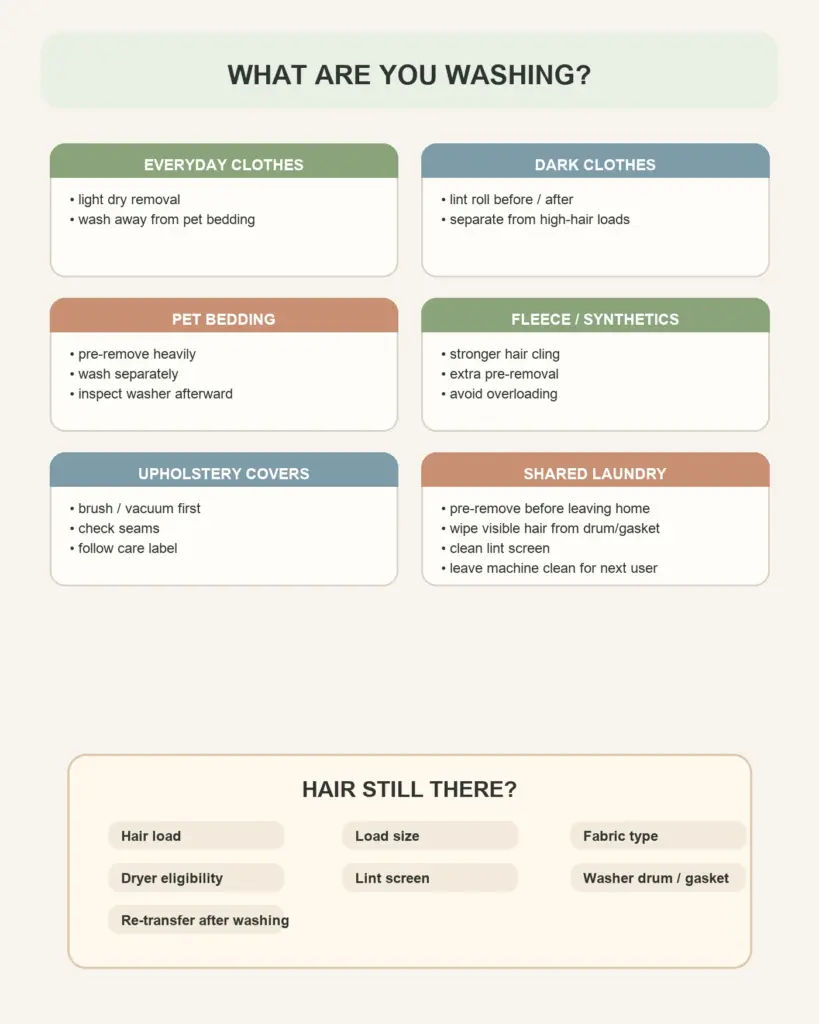
Everyday Clothes
Everyday clothes usually need light pre-removal and smart sorting. Lint roll visible hair before washing, especially around cuffs, thighs, lap areas, and sweatshirt fronts. If clothes were worn while brushing a pet or cleaning a pet bed, treat them as medium-hair items instead of normal clothes.
Do not wash everyday clothes with pet blankets unless you are willing to re-roll them afterward. The blanket may release more hair than the shirts can shed.
Dark Clothes
Dark clothes are not always hairier; they just reveal the problem more clearly. Black leggings, dark work pants, navy shirts, and dark fleece show pale pet hair, lint, and towel fibers.
Wash dark clothes away from pet bedding, towels, and fleece when possible. Use a lint roller before washing and again after drying if needed. If a dark item comes out hairy, check whether it was washed with a high-shedding fabric or stored near a pet resting area after washing.
Pet Bedding
Pet bedding should be treated as its own category. It can contain hair, dander, outdoor debris, odor, and sometimes accident residue. Remove dry hair first. Wash separately from human clothes. Check the care label. After washing, inspect the washer and remove visible hair from the drum or gasket.
If pet bedding is too bulky for your washer, do not force it. A compressed bed may not clean well and may strain the machine. Use a washable cover when possible so the cover can be washed more easily than the entire bed.
Fleece / Synthetic Blankets
Fleece and some synthetic blankets are pet-hair magnets. Hair can sit on the surface, lodge into the nap, or cling through static. Pre-removal is especially important here. A brush, glove, lint roller, or no-heat tumble may reduce the hair load before washing.
Avoid mixing fleece blankets with dark clothes or smooth shirts. If fleece keeps shedding hair into other loads, wash it separately and clean the lint screen carefully after drying.
Removable Upholstery Covers
Removable covers are convenient, but they can carry a large amount of pet hair from sofas, chairs, and cushions. Brush or vacuum them before removing if possible. Pay attention to seams, corners, zipper edges, and cushion folds.
Wash only according to the care label. Some covers shrink, fade, or lose shape if washed or dried incorrectly. If the cover is line-dry only, do not use a dryer just to chase pet hair. Use dry removal before washing and lint rolling after drying instead.
What to Do When Hair Is Still There After Washing
If clothes are still hairy after washing, do not immediately assume the washer is bad. Work through the path.
First, ask how much hair entered the washer. If the load included pet bedding, fleece, or visibly coated clothing, too much hair may have gone in at once. Next time, dry-remove more hair and wash high-hair items separately.
Second, check load size. A full drum can keep fabrics from moving. If the item could not unfold, hair may have stayed trapped. Rewash in a smaller load only if the fabric needs it; otherwise, dry-remove and tumble if safe.
Third, check fabric type. If the item is fleece, synthetic, brushed, or dark, it may need post-dry lint rolling. GE Appliances specifically notes that synthetic fibers and napped or brushed fabrics can be part of the cling problem.
Fourth, check whether the dryer stage was skipped. If the item can go in the dryer, drying may help move loose hair to the lint screen. If it cannot go in the dryer, you may need manual removal after air drying.
Fifth, inspect the lint screen. If it was already full, the dryer had less capture capacity. Clean it before and after pet-heavy loads.
Sixth, inspect the washer. Look for hair in the drum, gasket, or filter area. If hair remains there, the next load can pick it up.
Seventh, check where clean laundry went afterward. If clean clothes were folded on a pet bed, sofa, carpet, or bedspread where pets sleep, the hair may be new transfer, not wash failure.
Shared Laundry and Small-Apartment Problems
Apartment laundry has extra constraints. You may not have a laundry room. Your hamper may sit in the bedroom. Clean clothes may be folded on the bed. Pet bedding may dry on a rack near normal clothes. A shared washer may have rules, neighbors, or limited time slots.
The solution is to make the workflow compact:
- Keep one small pet-laundry bag for high-hair items.
- Lint roll before leaving for the laundromat.
- Carry a microfiber cloth for wiping visible hair from shared machines.
- Do not overload machines just to save coins.
- Clean the dryer lint screen before and after your load.
- Fold clean clothes on a clean towel, table, or bed area pets have not just used.
- Put clean laundry away quickly if pets climb into baskets.
If you use shared laundry, avoid leaving pet hair in the washer, dryer, folding table, or lint screen area. That is both practical and neighbor-friendly.
If you air-dry clothes in a small apartment, choose the cleanest low-hair zone you have. A drying rack beside a pet bed or sofa blanket can undo a good wash. If the only open space is near pets, cover clean drying items with a breathable garment cover or move pet bedding away until laundry is dry.
Common Pet-Hair Laundry Mistakes
The most common mistake is washing hairy items first and trying to remove hair later. Reverse the order. Remove dry hair first.
Another mistake is mixing pet bedding with everyday clothes. Pet bedding is usually the highest-hair laundry in the home. It should not be the center of a normal clothing load.
A third mistake is overloading the washer. A smaller, looser load often performs better than one packed drum.
A fourth mistake is treating dryer sheets, vinegar, or dryer balls as universal fixes. They may help in specific ways, but they do not replace dry removal, sorting, lint capture, and machine cleanup. Check your fabric care labels and machine manual before using additives.
A fifth mistake is ignoring the lint screen. If the dryer is part of your pet-hair workflow, the lint screen is part of the workflow too.
A sixth mistake is blaming the washer when clean laundry is being stored in a hair-heavy zone. If pets sleep on the bed, sofa, or laundry basket, clean clothes can pick up hair after the cycle is already finished.
How to Prevent Re-Transfer After Laundry
Re-transfer prevention starts before laundry is folded. Clean the lint screen. Check the drum. Remove clothes promptly. Fold them somewhere clean.
Then think about storage. A clean shirt placed on a pet blanket is no longer clean of hair. A laundry basket left on the floor can collect hair from corners and rugs. A drying rack near a shedding pet can turn into a hair collector.
In a small apartment, use simple barriers:
- Keep clean laundry in a covered basket.
- Fold on a clean towel if you do not have a laundry table.
- Store work clothes or dark clothes inside a closet, drawer, or garment bag.
- Keep pet bedding out of the clean-laundry zone.
- Wash pet bedding separately before it contaminates normal loads.
- Brush or vacuum the sofa before washing removable covers so they do not keep reseeding laundry.
You do not need a perfect system. You need a repeatable path that keeps hair from moving backward.
When the Washer Is Not the Real Problem
Sometimes laundry keeps getting hairy because the source is outside the washer. If clothes are covered again within minutes, check the storage and living area.
Common non-washer causes include:
- Pets sleeping in the laundry basket.
- Clean clothes folded on a hairy bedspread.
- Pet bedding stored beside clean clothes.
- Dark clothes hung near a sofa or pet blanket.
- Hairy towels mixed with normal laundry.
- Fleece blankets shedding into the dryer.
- A closet or hamper placed beside a high-shedding pet zone.
If the washer is visibly clean, the lint screen is clean, and the item leaves the dryer in good condition, the issue may be re-transfer. In that case, the fix is not another wash. It is storage, separation, and source control.
Practical Next Step
For the next hairy load, do not overhaul your entire laundry routine. Run one controlled test:
- Choose one high-hair item, such as a pet blanket or hairy sweatshirt.
- Dry-remove visible hair first.
- Wash it separately or with similar high-hair items.
- Avoid overloading the washer.
- Dry only if the care label allows.
- Clean the lint screen afterward.
- Check the washer drum and gasket.
- Store the clean item away from active pet-hair zones.
If the item improves, your problem was probably workflow order, not one missing product. If hair remains, look at fabric type, load size, dryer eligibility, lint capture, and machine cleanup. Pet hair laundry is rarely solved by one trick. It improves when every stage removes a little more hair and prevents it from moving back.
Sources
- Maytag: 4 Hacks for Removing Pet Hair from Your Laundry
- Maytag: How to Remove Dog Hair From Your Washer and Dryer
- Maytag: How to Get Rid of Dog and Cat Hair Everywhere
- GE Appliances: Washer – Pet Hair Left in the Washer
- GE Appliances: GE Profile UltraFast Combo Washer/Dryer – Pet Hair Removal Feature
- Whirlpool: How to Clean a Dryer Lint Trap Slot
- Whirlpool Product Help: Cleaning the Dryer Lint Filter
- Consumer Reports: Don’t Let Pet Hair Ruin Your Washer